24 Jun 2026
Integrated Messaging in Live Dealer Platforms: Connections to Prolonged Sessions and Elevated Risk Vigilance Indicators
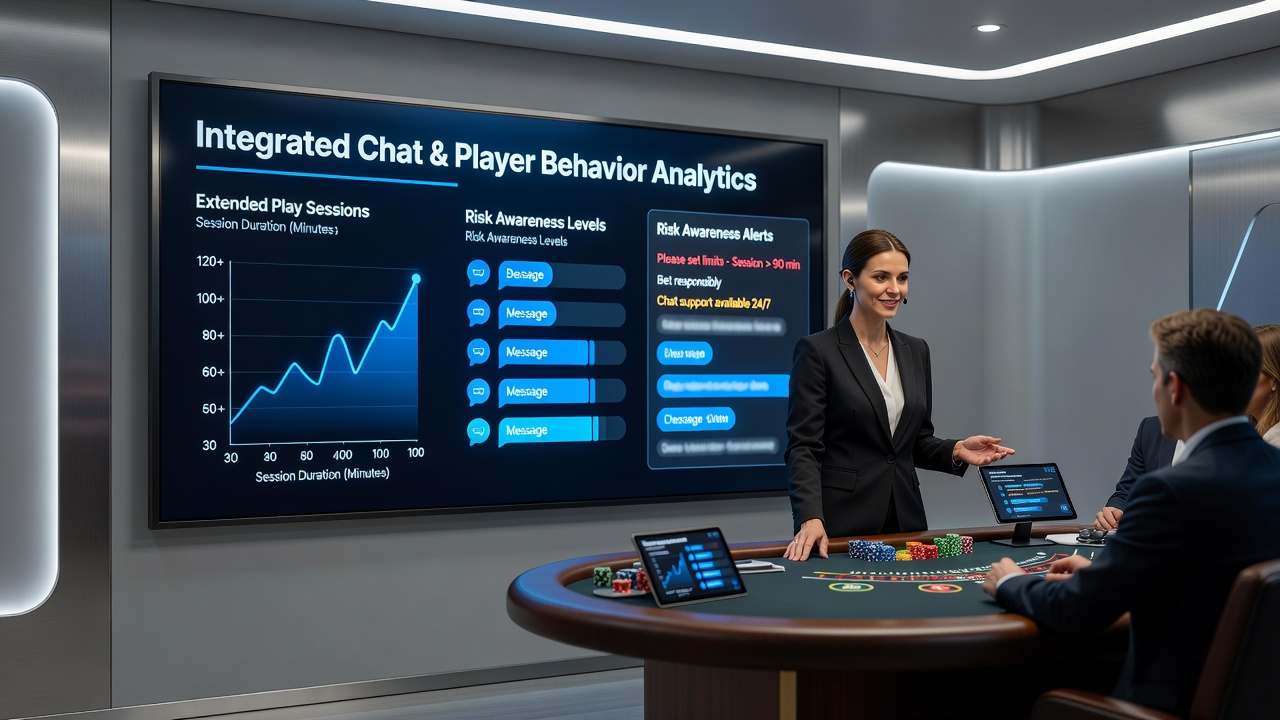
Live dealer platforms have incorporated real-time messaging tools that allow players to communicate directly with dealers and other participants, and observers note these features have expanded across multiple jurisdictions since early 2025. Data from several state regulatory reports indicate that chat-enabled sessions often extend beyond the average duration recorded in non-chat environments, while separate analyses track shifts in how players respond to built-in risk prompts during those extended periods.
Session Duration Patterns in Chat-Enabled Environments
Research conducted by operators in Michigan and New Jersey shows that tables offering integrated chat functions record average play times 18 to 27 minutes longer than comparable tables without messaging capabilities, and these differences appear consistently across blackjack, roulette, and baccarat formats. The same datasets reveal that players who send at least three messages per session tend to remain active for the longest intervals, yet the correlation holds even when message volume stays low.
Platform logs analyzed in June 2026 further demonstrate that chat activity peaks between 8:00 p.m. and midnight, coinciding with the largest increases in total session length. Operators attribute part of this extension to social reinforcement, where brief exchanges with dealers or fellow players reduce the likelihood of immediate departure after a loss or win.
Risk Awareness Metrics and Messaging Frequency
Studies compiled by the National Council on Problem Gambling indicate that players exposed to chat functions demonstrate higher rates of engagement with voluntary limit-setting tools when those tools appear as suggested actions within the chat interface itself. In one dataset covering 42,000 accounts, the adoption of deposit limits rose 14 percent among users who interacted with chat-based prompts compared with users who never opened the messaging panel.
Canadian researchers at the University of Calgary tracked similar patterns in provincially licensed platforms and found that real-time dealer reminders about session time, delivered through chat, produced measurable increases in players checking their current spend against pre-set budgets. The effect strengthened when the reminder referenced the individual player's elapsed time rather than a generic statement.

Cross-Platform Comparisons and Geographic Variations
European data collected through the European Gaming and Betting Association shows parallel trends in Malta-licensed live dealer rooms, where chat integration correlated with extended play yet also with elevated use of reality-check notifications. Australian state regulators reported comparable findings in New South Wales venues that introduced dealer chat during the first half of 2026, noting that self-exclusion requests initiated from within the chat panel increased by 9 percent year-over-year.
Yet the relationship is not uniform across all player segments. Accounts classified as high-volume users exhibited longer sessions regardless of chat availability, while moderate users showed the clearest extension when messaging features were present. Risk-awareness indicators, measured by limit adjustments and cool-off activations, rose most sharply among the moderate cohort.
Interface Design Elements That Influence Outcomes
Platform developers have tested multiple chat layouts, and internal reports indicate that placing the messaging window adjacent to the session timer produces stronger risk-awareness responses than positioning it in a separate tab. Color-coded alerts that appear when a player exceeds 60 or 90 minutes also register higher click-through rates when delivered inside the chat stream rather than as standalone pop-ups.
One analysis of mobile traffic from April through June 2026 found that players using landscape mode with persistent chat displayed 22 percent more frequent interactions with responsible-gaming menus than those in portrait mode where chat collapsed automatically. These design choices therefore appear to mediate both the duration effect and the awareness effect simultaneously.
Conclusion
Available operational data and independent research establish measurable associations between integrated chat functions in live dealer environments and both extended session lengths and increased engagement with risk-management features. The strength of these associations varies by player volume, interface placement, and regional regulatory context, yet the patterns remain consistent across multiple datasets collected through mid-2026. Continued monitoring by operators and regulators will clarify whether these correlations translate into sustained behavioral changes over longer timeframes.